One of the most significant comparisons of 2026’s small flagships is between the Google Pixel 11 and the Samsung Galaxy S26. Both smartphones include high-end designs, potent processors, sophisticated AI features, top-notch cameras, displays with high refresh rates, and long-term software support. But when it comes to their flagship phones, Google and Samsung have adopted different strategies. The Pixel 11 is built around a smooth Google-focused software experience, advanced AI capabilities, intelligent image processing, and dependable all-day battery performance. The Samsung Galaxy S26 prioritizes gaming, customisation, display quality, raw performance, and the larger Galaxy ecosystem. We will examine their design, display, performance, cameras, battery, software, AI features, advantages and disadvantages, and overall value in this thorough comparison.
A Brief Comparison of the Google Pixel 11 vs Samsung Galaxy S26
The Pixel 11 is intended for those who desire a relatively small flagship device with Google’s newest AI and photography capabilities. It has a massive 4,985mAh battery, a Tensor G6 processor, 12GB RAM, up to 512GB of storage, and a 6.3-inch display. It has an edge for long-range photography because its camera system also has a specialized 5x telephoto lens. The Snapdragon 8 Elite Gen 5 for Galaxy processor, 6.3-inch Dynamic AMOLED 2X display, 12GB RAM, up to 512GB storage, and 4,300mAh battery power the Galaxy S26. Performance, gaming, display quality, One UI, and Galaxy AI are all major features of Samsung phones.
Key Specifications
| Feature | Google Pixel 11 | Samsung Galaxy S26 |
|---|
| Display | 6.3-inch Actua OLED | 6.3-inch Dynamic AMOLED 2X |
| Refresh Rate | Up to 120Hz | 120Hz |
| Processor | Tensor G6 | Snapdragon 8 Elite Gen 5 for Galaxy |
| RAM | 12GB | 12GB |
| Storage | 256GB / 512GB | 256GB / 512GB |
| Main Camera | 48MP | 50MP |
| Ultrawide | 13MP | 12MP |
| Telephoto | 10.8MP, 5x | 10MP, 3x |
| Battery | 4,985mAh | 4,300mAh |
| Wired Charging | 30W | 25W |
| Wireless Charging | Up to 25W Qi2 | Up to 15W Qi2 |
| Software | Android 17 | Android 16 / One UI |
| RAM | 12GB | 12GB |
Design and Construction Quality
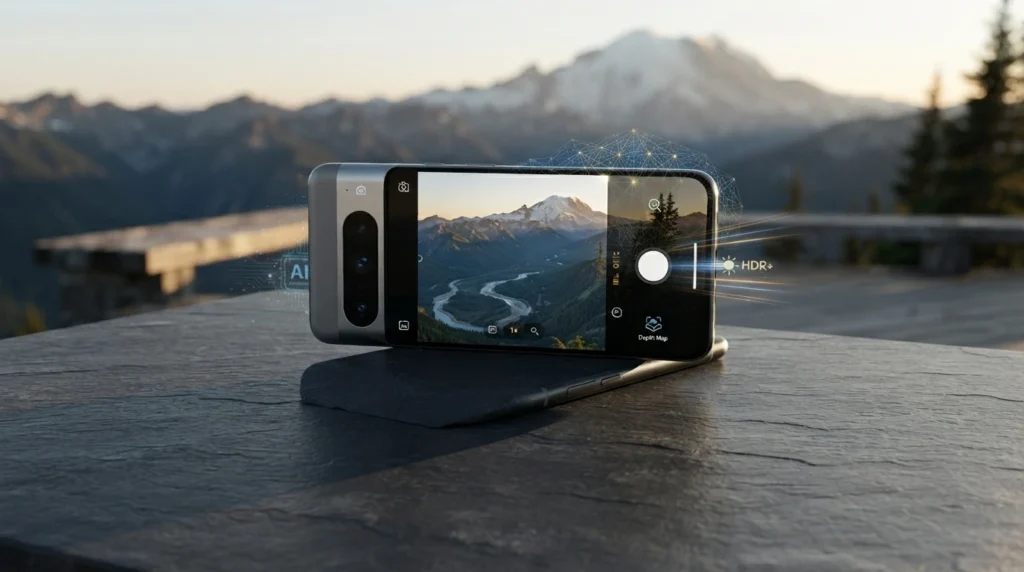
Although both the Pixel 11 and Galaxy S26 feature high-end manufacturing, their designs are very distinct from one another. Google keeps up the unique Pixel camera-bar design, which makes the Pixel 11 seem instantly identifiable. The phone’s high-quality frame, glass protection, and resistance to dust and water make it appropriate for daily use. With the Galaxy S26, Samsung adopts a more understated style. It is easier to use with one hand and comfortable to handle due to its small size and thin body. The Pixel 11 has a more distinctive visual identity than the Galaxy S26. Whether you like Samsung’s simpler design language or Google’s unique style will ultimately determine your selection.
The Samsung Galaxy S26 is the design winner.
The tiny and elegant appearance of the Galaxy S26 gives it a slight advantage. For those who prefer a phone that looks distinct from standard flagship smartphones, the Pixel 11 is an excellent option.
Show Comparison
Both phones have great screens, so customers who spend a lot of time reading, playing games, watching videos, or browsing social media shouldn’t be let down. The 6.3-inch Actua OLED display on the Pixel 11 has a refresh rate of up to 120 Hz. Google also highlights the phone’s strong brightness, which makes outside visibility one of its advantages. The Galaxy S26 has Samsung’s 6.3-inch Dynamic AMOLED 2X display with a 120Hz refresh rate. Samsung has a long history of making high-quality smartphone screens, and the S26 features great contrast, deep blacks, smooth animations, and vivid colors. When used regularly, both screens ought to feel high-end.
Winner of the Display: Pixel 11
Samsung is still quite competitive, but the Pixel 11 has the advantage because to its remarkable brightness capability. Both screens should offer a great experience for social media, gaming, movies, and everyday smartphone use.
Performance comparison between Snapdragon 8 Elite Gen 5 and Tensor G6
One of the main distinctions between these two cellphones is performance. Artificial intelligence, machine learning, photography, voice processing, and Google’s software ecosystem were all major design priorities for Google’s Tensor G6. The Snapdragon 8 Elite Gen 5 for Galaxy, which is built for superior CPU and GPU performance, powers Samsung’s Galaxy S26. Because of this, the Galaxy S26 is especially appealing to consumers who anticipate great sustained performance, demanding games, and intense multitasking. For routine tasks like surfing, messaging, taking pictures, streaming, and social media, the Pixel 11 should still seem incredibly quick. When it comes to game performance and raw processing, however, Samsung is in a better position.
Winner of Performance: Samsung Galaxy S26
Because its flagship Snapdragon chipset is better suited for intensive workloads and gaming, the Galaxy S26 tops this category. Google’s AI and computational photography features continue to be the main focus of the Pixel 11’s Tensor G6.
Comparison of Cameras
One of the best arguments in favor of the Pixel 11 is its camera performance. The Pixel 11 carries on the legacy of Google’s Pixel smartphones using computational photography to create stunning photographs. The phone has three cameras: a 10.8MP telephoto with 5x optical zoom, a 13MP ultrawide camera, and a 48MP primary camera. A 50MP primary camera, a 12MP ultrawide camera, and a 10MP telephoto camera with 3x optical zoom are all included in the Samsung Galaxy S26. Vibrant colors, robust HDR, and a variety of shooting modes are hallmarks of Samsung cameras. However, the Pixel 11 has an especially significant advantage for photographers because to Google’s image processing and lengthier 5x telephoto camera.
The Google Pixel 11 is the camera winner
For customers that value photography, the Pixel 11 is a better option overall. It is particularly appealing for travel, portraits, far-off scenes, and regular point-and-shoot photography due to its computational photography, AI-powered camera features, and 5x optical zoom.
Recording Videos
The Galaxy S26 carries on Samsung’s long history of being a formidable rival in smartphone video. Its camera technology is built to produce detailed video with enhanced low-light processing and robust stabilization. With the Pixel 11, Google is also focusing more on video production. Capturing, editing, and improving content directly from the smartphone is made easier by its software-based features. Social media creators who don’t want to utilize a computer for simple video editing may find this especially helpful. For casual video recording, both phones should perform admirably. While Pixel’s AI-assisted approach appeals to artists who like automated tools, Samsung may be more appealing to users who prefer traditional camera controls.
Winner of the video: tie
There isn’t a definite winner for everyone. While Pixel 11 places a heavy emphasis on AI-assisted creativity and computational processing, Samsung has a well-developed video system.
Life of a Battery
Another area where Google has a definite hardware edge is battery capacity. The Galaxy S26 has a 4,300mAh battery, whilst the Pixel 11 has a 4,985mAh battery. Because endurance is influenced by a number of factors, including CPU efficiency, display brightness, software optimization, mobile signal, and user behavior, a larger battery does not always translate into a longer real-world battery life. The Pixel 11, however, comes with a significantly larger battery capacity. Users that spend a lot of time reading, taking pictures, watching videos, or utilizing AI functions should find it enticing as a result. Given that the S26 is intended to be a small flagship with a thin body, Samsung’s smaller battery makes sense.
The Google Pixel 11 won the battery.
Because of its larger 4,985mAh battery, which provides it more capacity, the Pixel 11 wins the battery category. Google’s phone is the more appealing choice for heavy users who desire greater battery headroom.
Comparison of Charging
Neither smartphone fully controls the premium Android market when it comes to charging. Up to 30W wired and 25W Qi2 wireless charging are supported by the Pixel 11. Those who favor magnetic accessories and cable-free charging may find the wireless charging option very helpful. Although the Galaxy S26’s wireless charging speed is slower than the Pixel 11’s maximum wireless rate, it does offer 25W wired charging. As a result, both phones may seem a little conservative when compared to rivals that provide incredibly quick cable charging. The majority of users will still be able to conveniently recharge their phones during the day, tho. If wireless charging is a significant aspect of your daily routine, the Pixel 11 has a distinct advantage.
Winner of Charging: Google Pixel 11
Because it has a stronger wireless charging specification and faster wired charging, the Pixel 11 prevails. Although Samsung’s charging technology is sufficient, it is not a major benefit of the S26.
Experience with Software
Another significant distinction between the Pixel 11 and Galaxy S26 is software. The Pixel 11 comes with Android 17 and offers Google’s sleek Android experience. Although Google’s AI and Gemini technologies are deeply ingrained in the user experience, its interface is rather straightforward. The One UI on the Samsung Galaxy S26 provides a vast array of productivity tools and far more customisation. For consumers who enjoy multitasking, customization, widgets, and ecosystem features, Samsung’s software may seem more feature-rich than vanilla Android. For those who want a simple interface with fewer extraneous elements, Pixel is typically preferable. For those who desire more control over the appearance and functionality of their phone, Samsung is a superior option.
Winner of Software: Tie
The Galaxy S26 is superior in terms of customisation and feature richness, while the Pixel 11 is superior in terms of simplicity and Google’s Android experience. Your own software choices will determine the optimal choice.
Features of AI
Both businesses are making significant investments in artificial intelligence, which is starting to play a significant role in contemporary smartphones. Google’s Gemini ecosystem and Tensor G6 processor are advantages for the Pixel 11. Photography, voice interactions, editing, translation, and daily productivity all incorporate AI elements. Additionally, the Samsung Galaxy S26 has Galaxy AI capabilities that are intended to simplify everyday chores. Samsung’s strategy integrates AI with editing capabilities, productivity benefits, and One UI technologies. Google benefits from its strong ties to Gemini and its capacity to integrate AI with Pixel’s photo processing. On the other hand, Samsung offers a wider range of software features related to its AI ecosystem.
Google Pixel 11 is the AI winner.
Because Google’s software and hardware are designed with artificial intelligence in mind, the Pixel 11 has an advantage. Pixel should be especially enticing to users who frequently use Gemini, AI photography, voice features, and smart editing.
RAM and storage
Because modern flagship smartphones are increasingly being used for 4K video, gaming, high-resolution photography, and AI-powered applications, storage and memory are crucial. The Galaxy S26 and Pixel 11 both have 12GB of RAM, which should be more than plenty for multitasking. Additionally, both phones come with a 256GB storage capacity and a 512GB option. For users who don’t want to rely too much on cloud storage, this is good news. While 512GB is a superior option for hardcore photographers, video makers, and gamers, the 256GB configuration should be adequate for the majority of users. In this category, neither phone has a significant advantage.
Winner of Storage: Tie
This category is practically equal because both phones provide comparable memory and storage configurations. Instead, consider cameras, performance, battery life, and software while making your choice.
Connectivity
Another area where flagship phones excel is in modern connection. Advanced connectivity options like 5G, Wi-Fi 7, Bluetooth, NFC, and other contemporary wireless technologies are supported by the Galaxy S26. Additionally, 5G, contemporary Wi-Fi, Bluetooth, and NFC are supported by the Pixel 11. For users with compatible Wi-Fi 7 routers, Samsung’s edge in Wi-Fi technology may be helpful. However, most users won’t notice much of a difference for regular mobile data, messaging, streaming, and browsing. Both phones are made to be compatible with modern wireless networks and devices. This should not be the deciding factor unless connectivity requirements are really important to you.
Winner of Connectivity: Samsung Galaxy S26
The Galaxy S26 falls into this category due to its robust overall connectivity bundle and more recent Wi-Fi functionality.
Biometrics and Security
Smartphone security is a top priority for both Google and Samsung. Ultrasonic fingerprint authentication is used by the Pixel 11 and Galaxy S26 to provide users with a quick way to unlock their phones and verify sensitive actions. The security protections included in contemporary Android software are also advantageous for both devices. Google is well known for its deep connection with the Android operating system and security updates. Samsung’s Galaxy security platform offers a wealth of security measures as well. There shouldn’t be a significant security difference between the two phones for regular users. These are high-end gadgets made to offer long-term software support and safe authentication.
Winner of Security: Tie
This category is nearly equal because both smartphones provide robust biometric security and long-term software support.
Google Pixel 11 Benefits and Drawbacks
Superb computational photography
5x optical telephoto lens
Big 4,985mAh battery
Qi2 wireless charging up to 25W
A spotless Android 17 experience
Robust Google AI and Gemini integration 12GB RAM 256GB basic storage
Long-term assistance with software
Extremely bright display
Unique Pixel Design Drawbacks
In gaming, Tensor G6 could not be as good as Snapdragon.
30W wired charging is not very powerful.
Compared to One UI, less customisation
Market-specific availability may differ.
Certain AI features could differ depending on the location.
Samsung Galaxy S26 Benefits and Drawbacks
Advantages
Strong Snapdragon 8 Elite Gen 5 for the Galaxy
Superb Dynamic AMOLED 2X screen
Slim and compact design
Excellent performance in games
One UI experience with lots of features
Numerous Galaxy AI tools
Contemporary Wi-Fi connectivity
12GB RAM and 256GB base storage
Long-term assistance with software
Strong adaptability of the camera
Drawbacks
4,300mAh battery that is smaller
Just 25W of connected power
3x optical zoom, slower wireless charging than Pixel’s 5x
Heat can be produced by intense gameplay.
Which Phone’s Camera Is Better?
For those who are interested in photography, the Google Pixel 11 is a superior option. It is extremely versatile due to its combination of 5x optical zoom, AI-powered image processing, and computational photography. With a 50MP primary sensor, an ultrawide camera, and a 3x telephoto lens, the Samsung Galaxy S26 still has a powerful camera system. Users who like bright colors and a lot of manual settings might find Samsung more appealing. However, Pixel has an edge for regular photography because it can reliably create high-quality photographs with little effort. The Pixel 11 is probably the better camera phone if you frequently shoot far views, family photos, travel snaps, or portraits.
Which Phone Is Better for Playing Video Games?
For serious mobile gaming, the Samsung Galaxy S26 is a superior choice. Because of its robust CPU and GPU capabilities, the Snapdragon 8 Elite Gen 5 for Galaxy chip is better suited to demanding games and long workloads. In order to preserve performance during prolonged use, Samsung has also worked on thermal management. While the Tensor G6 is more concerned with AI and Google’s computational chores than optimal gaming performance, the Pixel 11 is still powerful enough for casual and moderate gaming. The Galaxy S26 should be higher on your shortlist if playing demanding 3D games is a significant part of your everyday smartphone usage.
Which Phone’s Battery Lasts Longer?
Because the Pixel 11’s 4,985mAh battery is significantly larger than the Galaxy S26’s 4,300mAh battery, it has the hardware advantage. Battery capacity is just one aspect of the problem, tho. Real-world endurance is influenced by a number of factors, including display settings, CPU efficiency, network strength, camera usage, gaming, and background programs. The bigger battery of the Pixel 11 offers more capacity and should give stronger battery potential for frequent users. The Galaxy S26’s compact shape is made possible by Samsung’s smaller battery. The Pixel 11 is the safer option if battery longevity is one among your top concerns.
Which AI-Friendly Phone Is Better?
The more powerful AI-focused smartphone is the Google Pixel 11. AI elements may be seen in photography, voice interactions, editing, translation, and productivity thanks to Google’s Tensor platform and Gemini ecosystem, which are closely linked to the Pixel experience. With Galaxy AI features included into One UI, the Samsung Galaxy S26 is another potent AI smartphone. But Google’s power stems from its control over both its AI ecosystem and the Android OS experience. The Pixel 11 is the more sensible option for consumers who want AI to be a major factor in their phone purchase.
Which Phone Is Better for Daily Use?
For daily tasks like social media, surfing, calls, texting, photography, streaming, and productivity, both phones are great. For those who like a simple Android interface, Google services, AI technologies, and basic photography, the Pixel 11 is a better option. Users that appreciate personalization, multitasking, Samsung apps, and the larger Galaxy ecosystem will benefit more from the Galaxy S26. Thus, the distinction is less about fundamental usability and more about software philosophy. During regular everyday use, neither phone should feel antiquated or sluggish. The choice may also be influenced by your current ecosystem. The S26 might be more practical for Samsung users who have Galaxy accessories.
FAQ
Is the Pixel 11 superior to the Samsung Galaxy S26?
Photography, AI, battery life, and Google’s Android experience are all improved with the Pixel 11. For gaming, sheer performance, personalization, and Samsung’s ecosystem, the Galaxy S26 is superior. The best option will depend on your priorities because both are high-end flagship smartphones.
Is the camera on the Pixel 11 better?
Google’s computational photography and its 5x optical zoom camera give the Pixel 11 a significant advantage. With its 50MP primary camera and Samsung’s image processing expertise, the Galaxy S26 is still competitive.
Is the Pixel 11 speedier than the Galaxy S26?
The Snapdragon 8 Elite Gen 5 for Galaxy chipset is anticipated to provide the Galaxy S26 an advantage in terms of raw CPU and GPU performance. AI and computational photography are given additional attention in Pixel 11.
Does the Pixel 11’s battery have a larger capacity?
Indeed, the Galaxy S26 has a 4,300mAh battery, and the Pixel 11 has a 4,985mAh battery. Because of this, Google’s phone has a substantial hardware edge in terms of battery capacity.
Which phone is most suitable for gaming?
Because the Samsung Galaxy S26’s flagship Snapdragon CPU is built for high-end performance, it is a superior option for gaming. The Pixel 11 is more appropriate for people who value photography and artificial intelligence.
Which phone’s AI is superior?
Because of Google’s Tensor platform and Gemini integration, the Pixel 11 offers a more robust AI-focused experience. Thru One UI, the Samsung Galaxy S26 also provides a wealth of Galaxy AI functions.
In 2026, which phone should I purchase?
If you value clean Android, AI, cameras, and battery life, get the Pixel 11. If performance, gaming, display quality, customisation, and Samsung’s ecosystem are important to you, go with the Galaxy S26.