With a new product purportedly named the Galaxy H1, Samsung may be getting ready to make a significant comeback to the high-end over-ear headphone market. With its Galaxy Buds portfolio, the company already has a significant presence in the wireless audio market, but a high-end over-ear model would place Samsung in a position where Apple, Sony, and Bose have established a solid reputation.
Galaxy H1 seems to be working on a new set of wireless over-ear headphones, according to recent rumors based on information found within the Galaxy Wearable app. According to reports, the smartphone is referred to as the Samsung Galaxy H1 either internally or in software references. Although Samsung has not formally disclosed the product, its features, or its debut date, current reports indicate that the corporation may aim for a 2027 release.
The Galaxy H1 has the potential to be one of Samsung’s most intriguing audio products in years if it is ever released. The alleged Galaxy H1 is especially important because the firm hasn’t released a flagship over-ear headset since the previous Level On era.
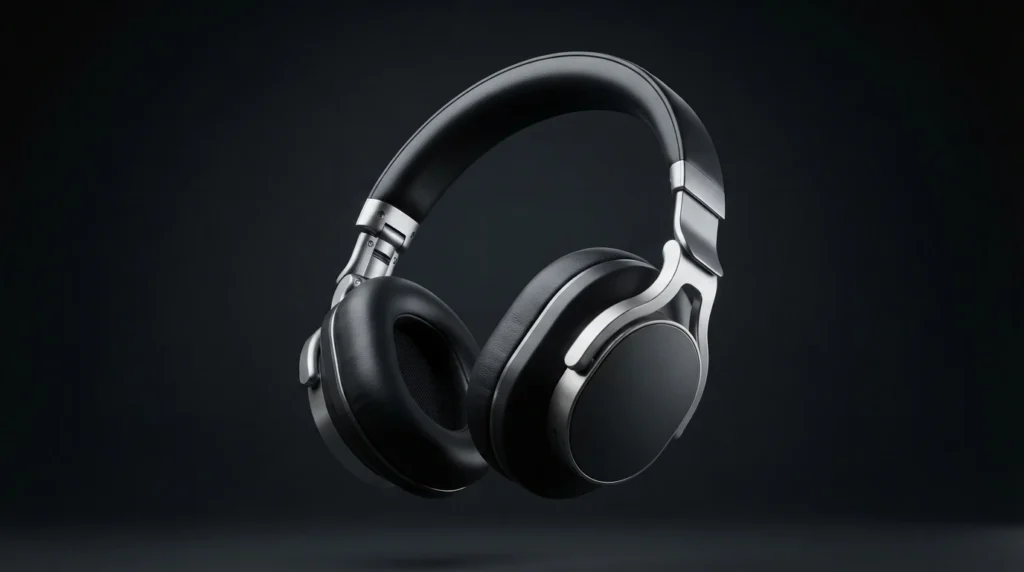
Overview of the Samsung Galaxy H1
According to reports, the Samsung Galaxy H1 is a high-end wireless over-ear headset that will replace the company’s current Galaxy Buds line.
Over-ear headphones, in contrast to earbuds, cover the full ear and typically offer more physical room for larger drivers, batteries, and sophisticated microphones. Because of this, consumers who prefer longer listening sessions, improved passive isolation, and immersive music find the category very appealing.
Developing a product that does more than just replicate the features of current rivals will be Samsung’s problem. Instead, the Galaxy H1 might prioritize intelligent features, high-quality wireless audio, and interaction with the Galaxy ecosystem.
Many crucial characteristics are still unclear at this time. The driver size, battery capacity, weight, dimensions, ANC performance, water resistance, cost, and precise release date of the Galaxy H1 have not been formally confirmed by Samsung.
As a result, it’s critical to distinguish between reported data and expectations.
Galaxy H1: Reported and Expected Details
| Feature | Current Information |
|---|
| Product name | Samsung Galaxy H1 |
| Category | Over-ear wireless headphones |
| Connectivity | Expected Bluetooth |
| Audio codec | SSC UHQ is expected |
| AI features | Gemini and Bixby integration may be included |
| Ecosystem | Expected strong Galaxy integration |
| Launch | Reportedly 2027 |
| Price | Not officially known |
| ANC | Not confirmed |
| Battery life | Not confirmed |
| Driver size | Not confirmed |
| Official announcement | Not yet made |
The Significance of the Galaxy H1
Although Samsung has grown to be one of the most well-known brands in consumer electronics, its position in high-end headphones has been rather small when compared to rivals like Apple and Sony.
Samsung has a dominant position in the market for true wireless earbuds thanks to the Galaxy Buds line. For those who appreciate comfort, immersive sound, active noise cancelation, and extended listening sessions, high-end over-ear headphones are still a significant segment.
Thus, Samsung’s personal audio environment might be completed with an over-ear variant bearing the Galaxy brand.
Samsung’s wider audio experience may potentially be advantageous for the rumored Galaxy H1. The larger Samsung company has substantial experience with high-end audio technology because to Samsung’s ownership of Harman, which has a portfolio of well-known audio brands.
Although Samsung’s access to acoustic knowledge may be an intriguing benefit, this does not necessarily imply that the Galaxy H1 will employ technology from a particular Harman brand.
Design of the Samsung Galaxy H1
The ultimate design of the Galaxy H1 is still a mystery.
An over-ear wireless headphone design is allegedly shown by connection-status symbols in the Galaxy Wearable app references. These icons shouldn’t be regarded as an official depiction of the finished retail product, tho.
Samsung might design a more upscale look especially for the flagship headphone category, or it could go with a basic style akin to that of its Galaxy Buds.
Three factors would need to be balanced for a design to be successful:
Exquisite appearance
Comfort during extended sessions
Lightweight design
When over-ear headphones are overly heavy or put too much pressure on the ears, they can become painful. Because of this, the headband, ear cushions, and overall weight of the Galaxy H1 may be just as significant as its audio components.
Although no official color selections have been confirmed yet, Samsung might also provide a variety of finishes.
Anticipated Audio Quality
The Galaxy H1’s audio quality is probably going to be one of its main selling features.
According to reports, the headphones may heavily rely on Samsung’s Seamless Codec Ultra High Quality, or SSC UHQ. The codec is connected to more recent Galaxy tablets and smartphones and is made for high-quality audio transmission within Samsung’s ecosystem.
Galaxy phone owners may be able to enjoy a more integrated high-resolution wireless audio experience if Samsung successfully adopts SSC UHQ.
However, whether or not headphones sound great depends on more than just codec support.
Additionally, sound quality is influenced by:
Design of drivers
Amplification, tuning, and digital signal processing
Cancelation of noise
Acoustic ear cups
Firmware Source Quality
Instead of just depending on a high-bandwidth codec, Samsung might use the Galaxy H1 as a chance to develop a unique sound character.
An Important Feature Could Be Active Noise Cancelation
Advanced active noise cancelation is increasingly anticipated for high-end over-ear headphones, even tho it hasn’t been formally announced for the Galaxy H1.
Strong ANC would make sense if Samsung wanted the Galaxy H1 to directly compete with high-end headphones from Apple and Sony.
An advanced ANC system could assist in lowering low-frequency ambient noise, including:
The sounds of an airplane engine
Noise from busses and trains
Background noise in an office
Air conditioners
Traffic
In order to enable users to hear their surroundings without taking off their headphones, Samsung may integrate ANC with ambient or transparency modes.
These modalities’ quality will be important. Instead of producing a false or highly processed impression, good transparency processing should sound natural.
AI and the Galaxy H1
Artificial intelligence is one of the most intriguing potential applications for the Galaxy H1.
According to recent sources, the headphones may support Samsung’s AI ecosystem, which includes Gemini and Bixby, in a manner like to that of the company’s more recent Galaxy Buds devices.
Because of this, the Galaxy H1 may become more than just a standard headset.
Possible applications can consist of:
Voice directives
Control of music
Responding to queries
Taking care of calls
Control of smart devices
Features pertaining to translation
Contextual support
However, rather than being verified Galaxy H1 specifications, these should now be regarded as possible possibilities.
The main notion is obvious: Samsung might want its high-end headphones to be a part of a larger Galaxy ecosystem driven by artificial intelligence.
Integration of the Galaxy Ecosystem
This might out to be the greatest benefit of the Galaxy H1.
While Samsung has been creating comparable ecosystem-based experiences around Galaxy Buds, Apple’s AirPods are heavily connected with Apple products.
Fast pairing, device switching, and tighter integration with Galaxy smartphones, tablets, televisions, and other compatible devices are possible features of a high-end Galaxy H1.
Users might be able to switch between a Galaxy phone and tablet, for instance, with little effort on their part.
Additionally, the headphones might profit from Samsung’s larger network of connected devices and services.
People who already own several Galaxy products may find the Galaxy H1 quite appealing if Samsung can make the experience seamless.
Battery Life of the Galaxy H1
The battery’s specs are unknown.
Therefore, until Samsung formally releases the headphones, assertions regarding a particular number of hours should be handled with caution.
However, as over-ear headphones are often used for extended periods of time, battery life will be crucial.
Ideally, a competitively priced high-end headphone should have a sufficient battery capacity for work, travel, commuting, and enjoyment without the need for continuous charging.
Although the precise charging parameters have not been established, a contemporary premium headphone would also be expected to support USB-C charging.
Fast charging, which enables consumers to get several hours of listening time from a brief charging session, may also be included by Samsung.
Connectivity of the Galaxy H1
Bluetooth wireless connection is anticipated for the Galaxy H1.
Stable Bluetooth performance is crucial for contemporary high-end headphones. When moving around their homes, workplaces, or public areas, users anticipate that headphones will keep a steady connection.
Additionally, Samsung might provide Galaxy devices more connectivity options.
Potential locations consist of:
Quick pairing
Connectivity across multiple devices
Switching devices automatically
Modes with low latency
Superior wireless USB-C audio
The precise connectivity requirements are still unknown, tho.
Apple and Sony versus the Samsung Galaxy H1
Samsung may face competition from some of the biggest brands in the market if it introduces the Galaxy H1 as a high-end product.
Apple’s AirPods Max and Sony’s high-end WH-series headphones are probably the most obvious analogies.
Long battery life, sound customisation, and noise cancelation have all contributed to Sony’s reputation. Apple places a strong emphasis on luxury hardware, spatial audio, and ecosystem integration.
Samsung might try to hold a similar premium position while setting itself apart with AI capabilities, SSC UHQ, and Galaxy ecosystem integration.
An intriguing three-way rivalry could result from this:
Apple: For Apple users, the strongest ecosystem integration.
Sony: Well-known for wireless headphones, sound customisation, and ANC.
Samsung: A possible fusion of AI capabilities, excellent wireless audio, and Galaxy integration.
In the end, pricing and execution will determine the Galaxy H1’s success.
The Samsung Galaxy H1 Pro
These are prospective benefits rather than verified review findings because the product has not yet been formally launched.
- Robust Galaxy Integration
By providing deeper ecosystem features, Samsung might make the Galaxy H1 particularly appealing to Galaxy smartphone owners.
- The Premium Over-Ear Form Factor
Compared to little earbuds, the bigger design can offer a more engaging listening experience.
- Support for SSC UHQ
For compatible Galaxy devices and consumers who value wireless audio quality, reported SSC UHQ support may be a significant benefit.
- Possible Features of AI
Beyond just playing music, Gemini and Bixby integration might make the headphones more intelligent and practical.
- The Audio Experience of Samsung
Samsung has significant exposure to audio technology and brands thanks to its broader partnership with the Harman audio division.
Cons of the Samsung Galaxy H1
Additionally, there are a number of possible drawbacks.
- There are currently no official specifications.
There is currently very little verified information available to consumers about the product.
- Potential Limitations of the Galaxy Ecosystem
Some of the most sophisticated functions could function best with Galaxy devices that are compatible.
- Unknown Cost
The H1 may be expensive if Samsung markets it as a high-end flagship.
- There is fierce competition
Bose, Apple, and Sony are already well-known manufacturers of high-end over-ear headphones.
- The Launch in 2027 May Be Far Off
According to current reports, a 2027 release is likely; however, plans and specifications may alter before to launch.
Is Samsung Entering the Market for High-End Headphones at Last?
Samsung would make a significant comeback to the over-ear headphone market with the Galaxy H1.
The Level On headphones were formerly available via Samsung, although they were released years before the company’s current Galaxy ecosystem and before it acquired Harman. As a result, the alleged Galaxy H1 would be entering a completely different market.
These days, high-end headphones are used for more than just music listening.
They are becoming more and more venues for:
AI helpers
Communication by voice
Spatial audio
Intelligent controls
Cancelation of noise
Connectivity across multiple devices
Superior wireless codecs Integration of ecosystems
This gives Samsung the chance to develop something far more sophisticated than its previous over-ear devices.
What We Hope to See in the Galaxy H1
A few features would be very helpful if Samsung wanted the Galaxy H1 to stand out.
Outstanding Comfort
A high-end headphone ought to be cozy for many hours.
Robust ANC
The finest items in the category should be able to compete with noise cancelation.
Mode of Natural Transparency
Ambient sound need to be sensitive and organic.
Superb Microphones
Modern headphones must have clear voice calls.
Extended Battery Life
The headphones should be able to withstand both travel and a full workday.
Adaptable Compatibility
Although Galaxy-specific capabilities are helpful, Windows, Android, and other Bluetooth devices should still be compatible with the headphones.
Competitive Costs
Samsung doesn’t have to be the most affordable choice, but the device should offer a distinct advantage over well-known rivals.
Should You Wait for the Samsung Galaxy H1?
The Galaxy H1 is definitely worth seeing if you’re a fan of Samsung.
However, purchasing choices ought to be postponed until the product is formally announced by Samsung.
The Galaxy H1 has not yet been formally released as a consumer device; instead, it is still a reported and developing product. The best available information suggests an over-ear wireless design, probable AI assistant integration, SSC UHQ support, and a likely release date of 2027.
It would be premature to make definitive statements on ANC performance, sound quality, battery life, or cost until Samsung verifies the specifications.
Final Decision
If the rumors are true, the Samsung Galaxy H1 may end up being one of Samsung’s most intriguing audio products.
With Galaxy Buds, Samsung already has a well-established wireless earbud ecosystem, but a high-end over-ear headset would clearly close a gap in its product selection.
The Galaxy H1 has an intriguing foundation thanks to its alleged over-ear design, wireless connectivity, SSC UHQ, Galaxy ecosystem integration, and support for AI assistants.
The most important question is whether Samsung can match the sophistication provided by Sony’s high-end WH-series headphones and Apple’s AirPods Max.
For the time being, the Galaxy H1 should not be considered a finalized gadget but rather an anticipated, unconfirmed product. There is undoubtedly potential, but for the Galaxy H1 to be a true rival for high-end headphones, Samsung will need to provide exceptional sound, comfort, ANC, battery life, and software integration.
Galaxy owners who have been waiting for a flagship Samsung over-ear headphone may find the Galaxy H1 to be an appealing option if Samsung gets those components right.
FAQ
What is the Galaxy H1 from Samsung?
According to reports, Samsung is developing a high-end over-ear wireless headset called the Galaxy H1. There have apparently been mentions to the product in the Galaxy Wearable app.
When is the Samsung Galaxy H1 going to be released?
Although Samsung has not formally confirmed a release date, current reports indicate that the Galaxy H1 may be released sometime in 2027.
Will ANC be supported by the Galaxy H1?
ANC has not received formal confirmation. Advanced noise cancelation would make sense given that the Galaxy H1 is supposedly meant to compete in the market for high-end over-ear headphones, but it shouldn’t be considered definite until Samsung makes an announcement.
Will Samsung SSC UHQ be supported by the Galaxy H1?
According to reports, SSC UHQ is anticipated to be supported, especially for Galaxy devices that are compatible.
Will Gemini and Bixby be compatible with the Galaxy H1?
According to reports, the Galaxy H1 might feature AI assistants like Bixby and Gemini. Official details regarding the precise functionality are still pending.
What is the price of the Samsung Galaxy H1?
A pricing has not been disclosed by Samsung. Therefore, until an official announcement is made, any precise price that is being discussed online should be regarded as conjecture.
Will non-Samsung phones be compatible with the Galaxy H1?
Although Bluetooth headphones often function with compatible handsets, it is still unknown how many Galaxy-only capabilities are available on non-Samsung phones.
Is the Galaxy H1 superior to the AirPods Max?
It’s too soon to tell. The Galaxy H1 has not yet undergone independent testing or been formally released. After debut, its performance will need to be compared to that of the AirPods Max, Sony, and Bose headphones.
Is Samsung producing over-ear headphones once more?
Samsung is apparently working on a new over-ear headset known as the Galaxy H1. After the previous Level On generation, it would mark Samsung’s comeback to the market.
Should I purchase a Galaxy H1 right away?
Since the product has not yet been formally introduced, a purchase decision cannot be made. Waiting for Samsung’s official announcement, specifications, pricing, and availability is preferable if you are interested.