Selecting the smartphone with the lowest price is no longer the only way to find the finest deal in the USA. Although a low-cost phone may save you money up front, it may let you down with a mediocre camera, sluggish performance, short battery life, little software support, or an obsolete display after a few months.
The market for mid-range smartphones has grown considerably more competitive in 2026. Affordable iPhones, Samsung Galaxy A-series phones, Motorola smartphones, and Google’s Pixel A-series are among the options available to buyers. The Google Pixel 10a is one of the best value options for the majority of Americans when considering pricing, display quality, camera performance, battery life, software support, AI features, durability, and everyday usability.
The Pixel 10a, which comes with 128GB and 256GB of storage, is presently priced at $499 on Google. It has a 6.3-inch OLED display with 120Hz capability, a Tensor G4 engine, a 5,100mAh battery, two back cameras, IP68 security, wireless charging, and seven years of software and security upgrades.
The Pixel 10a does not have the most advanced camera hardware or the fastest phone available. It offers a balanced smartphone experience without requiring you to spend $800 or $1,000, which makes it appealing in a new way.
Therefore, the Pixel 10a should be at the top of your list if you’re looking for the finest value phone available in the USA in 2026.
A Brief Verdict
The Google Pixel 10a is our choice for the greatest value overall.
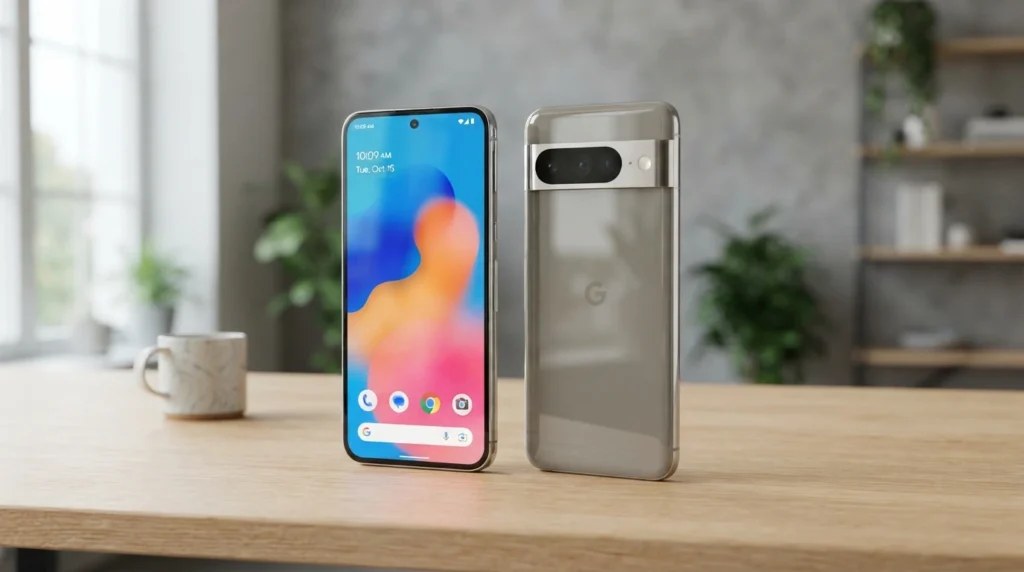
Because it masters the basics, the Pixel 10a is very appealing. It has a bright 6.3-inch display that can run at up to 120Hz, a camera system that consistently takes good pictures, a 5,100mAh battery that can last more than a full day, and seven years of Google software support.
Balance is the main justification for purchasing it.
Features that were formerly exclusive to high-end phones are still available to you even though you are not paying flagship money. The Pixel 10a seems more costly than its price indicates because of its AI capabilities, superior computational photography, wireless charging, IP68 water resistance, and frequent upgrades.
However, there are other options. For those who are already involved in Apple’s ecosystem, the iPhone 17e is a superior option; for those who like Samsung’s UI, hardware design, and ecosystem, the Galaxy A57 may make more sense.
However, the Pixel 10a is the simplest suggestion for the typical American consumer who seeks the most value for their money.
Cost
The Google Pixel 10a carries a starting price of $499 in the US market.It comes with 128GB or 256GB of storage from Google.
The Pixel 10a’s starting price of $499 is significant since it makes it competitive with other mid-range phones while providing a number of capabilities that aren’t normally available in this price range.
For those who use social media, stream music and videos, occasionally snap pictures, and depend on cloud storage, the 128GB model ought to be sufficient. However, the 256GB model would be a better long-term investment if you intend to keep the phone for a number of years.
During important US shopping seasons, prices might also fluctuate considerably. The official MSRP should not always be regarded as the final street pricing because carrier promotions, trade-in deals, and retailer discounts can make the Pixel 10a even more appealing.
However, $499 is certainly a good place to start when it comes to sheer value.
Details
Here is a brief overview of the key features of the Google Pixel 10a:
6.3-inch Actua pOLED display
Dimensions: 2424 x 1080
Rate of refresh: 60–120 Hz
Maximum brightness: 3,000 nits
Google Tensor G4 processor
8GB of RAM
128GB or 256GB of storage
48MP primary camera
13MP ultrawide camera
13MP front camera
Typical battery capacity: 5,100mAh
Charging: Compatible with higher-wattage PPS charging for quicker charging behavior, up to 30W fast charging
Qi-certified wireless charging
Android 16 was the operating system at debut.
Seven years of software support
IP68 water resistance
Connectivity: 5G, Wi-Fi 6E, Bluetooth 6 Security: Titan M2 security coprocessor
USB: Type-C 3.2
The Pixel 10a’s 8GB RAM, Tensor G4 processor, 5,100mAh battery, 6.3-inch 120Hz display, and twin camera configuration are all confirmed by Google’s official specifications.
Instead of being a specification-sheet monster, this product appears to be well-rounded on paper.
Create and Construct
Although the Pixel 10a doesn’t aim to mimic a high-end flagship, it also doesn’t feel like a cheap phone.
It weighs about 6.5 ounces and is roughly 6.1 inches tall, 2.9 inches wide, and 0.4 inches thick. The phone has a composite matte rear panel and a slick aluminum frame.
Compared to glossy backs, the matte surface helps minimize fingerprints, making it especially useful for daily usage.
Another significant benefit is durability. The Pixel 10a has an IP68 rating for dust and water resistance with Corning Gorilla Glass 7i on the front. Additionally, Google incorporates recyclable materials into a number of phone components.
IP68 protection is an important value feature for a phone in this price range. It implies that the Pixel 10a need not be handled like a delicate low-cost gadget.
Overall, the design is subtle. The Pixel 10a’s straightforward design is ideal for regular users, although some consumers might prefer the more upscale look of a flagship Galaxy or iPhone.
Show
One of the Pixel 10a’s best characteristics is its display.
A 6.3-inch Actua pOLED screen with a resolution of 2424 x 1080 and a refresh rate ranging from 60 Hz to 120 Hz is included. Google gives it ratings of up to 3,000 nits at maximum brightness and up to 2,000 nits in HDR.
There is a discernible difference with that 120Hz capability.
Compared to traditional 60Hz displays, scrolling through websites, social media feeds, and app menus feels more fluid. Additionally, animations seem more fluid, giving the impression that the phone is speedier even when you’re not working on difficult activities.
Another benefit is brightness, particularly for those who frequently use their phones outside.
The Pixel 10a outperforms the iPhone 17e, which has a 60Hz display, in this crucial area. The Pixel’s 6.3-inch screen, refresh rate of up to 120 Hz, and better peak brightness are highlighted in Google’s own comparison.
For most people, the Pixel 10a’s screen is adequate for watching YouTube, Netflix, TikTok, or social media.
Performance
Google’s Tensor G4 engine and 8GB of RAM power the Pixel 10a.
This phone wasn’t made with benchmark scores in mind. AI, machine learning, photography, and common smart features are the main focuses of Google’s Tensor platform.
The Pixel 10a is more than capable for everyday use.
Common tasks like chatting, navigation, surfing, streaming, and social media don’t pose a significant issue, apps launch swiftly, and multitasking is usually seamless.
The phone’s performance under prolonged, high workloads is the more important question.
A performance-focused phone or flagship will be a better choice if your top priorities are intense video editing or optimal gaming performance. The fastest Snapdragon-powered gaming phones are not the direct competitors of the Pixel 10a.
However, performance is more than adequate for the typical customer.
When talking about value, that distinction is crucial. A pleasant smartphone experience doesn’t require the fastest processor on the market.
The camera
Perhaps the Pixel 10a’s best value feature is its camera.
A 48MP wide camera and a 13MP ultrawide camera make up the rear arrangement. The ultrawide has a 120-degree field of view, while the main camera uses a huge 1/2-inch sensor. Super Res Zoom up to 8x is another feature offered by Google.
Megapixel count alone isn’t the Pixel’s greatest camera advantage. It’s computational photography from Google.
Historically, pixel phones have been good at processing challenging photos, especially in poor lighting. With features like Nite Sight, Portrait Mode, Macro Focus, Face Unblur, Real Tone, Top Shot, and other computational photography capabilities, the Pixel 10a carries on this concept.
Another crucial component is the ultrawide camera.
While a single-camera phone can capture decent normal images, an ultrawide offers far greater versatility for travel, group photos, architecture, and landscapes.
AI-assisted editing tools are also available on Google. Improving photos without launching a complex professional editing program can be made simpler with features like Magic Eraser, Best Take, Photo Unblur, Portrait Light, and conversational photo editing.
The back camera can record in 4K at up to 60 frames per second, and there are stabilization options for smoother video.
Therefore, the Pixel 10a is among the simplest models to suggest if you’re searching for a photography phone under $500.
The battery
Another significant advantage is battery life.
Google claims that the Pixel 10a would last more than 30 hours on a standard 5,100mAh battery. Under the right circumstances, Extreme Battery Saver can increase the stated battery life to up to 120 hours.
Naturally, how you use the phone determines how long the battery lasts in real life.
Any smartphone can be depleted more quickly by intense gaming, 5G data, maximum brightness, navigation, and heavy camera use. However, the Pixel 10a is designed to comfortably target all-day use for everyday tasks like messaging, browsing, social media, photography, music, and video.
Additionally, charging is better than previous versions. When using a compatible 45W USB-C PPS charger or higher, Google claims the phone may reach up to 50% in about 30 minutes; however, the charger is available separately.
Convenience is further enhanced with wireless charging.
The total battery bundle is great for the price, even though it might not be the fastest-charging phone available.
AI and software
This is where the Pixel 10a stands apart from a lot of its rivals.
Google guaranties seven years of OS, security, and Pixel Drop upgrades for the phone, which debuted with Android 16.
Long-term software support is important since a phone with years of security and updates has a reduced effective cost of ownership.
Additionally, Google thoroughly incorporates Gemini and other AI features into the Pixel experience. The phone has AI-powered features including Circle to Search, Gemini, Gemini Nano, and Gemini Live.
The AI capabilities go beyond text generation.
They can help with everyday productivity, calls, photos, translation, and searching. Google’s strategy is to integrate AI into the phone’s standard UI rather than making it a feature you use infrequently.
The seven-year update pledge is especially appealing to customers who intend to retain their phone for five or more years.
Playing games
Both popular and casual gaming are easily handled by the Pixel 10a.
Popular multiplayer games, puzzle games, racing games, and less difficult 3D games should all be flawlessly playable.
Additionally, the 120Hz display contributes to smoother scrolling and compatible games.
Serious mobile gamers, however, ought to search elsewhere.
The Tensor G4 is not designed with gaming in mind, and prolonged high-performance gaming may put greater strain on the device than regular use.
A performance-oriented Android phone with a more game-focused processor and better heat management can be more cost-effective if your phone is mostly used for gaming.
The Pixel 10a’s gaming performance is sufficient for everyone else.
Advantages and disadvantages
Advantages
Great starting price of $499
OLED display with 120Hz capability
incredibly bright screen
Robust computational photography
A practical 13MP ultrawide camera
Big 5,100mAh battery
Charging wirelessly
IP68 resistance to dust and water
Updates to the software for seven years
Google AI capabilities that are useful
A tidy Android experience
Small and useful design
Drawbacks
For intense gaming, the Tensor G4 isn’t the quickest processor.
For demanding users, 128GB of basic storage and only 8GB of RAM could seem constrained.
There is no dedicated telephoto camera, and charging is not the best in the class.
Those who don’t use Google’s ecosystem might find some AI functions less helpful.
Experience in the Real World
Only a portion of the story is revealed by specifications.
Because each component works well together, the Pixel 10a is an excellent value phone.
Everyday interaction feels high-end thanks to the 120Hz display. Strong results are produced by the camera without the need for photographic knowledge. For tough days, the battery is big enough. Long-term updates are applied to the clean software. Concerns regarding unintentional water exposure are lessened by IP68 protection.
The Pixel 10a is not groundbreaking due to any one of these qualities alone.
When combined, they provide a phone that feels whole.
For the majority of people, that is precisely what they require.
You can get a phone with a larger display, a quicker CPU, or more megapixels, but those features don’t always translate into an improved daily experience.
The Pixel 10a is a particularly compelling option for someone who wants to purchase a phone and maintain it for a number of years without continuously considering upgrading.
Pixel 10a in Comparison to Rivals
iPhone 17e vs. Pixel 10a
For American consumers, this is most likely the most significant comparison.
The Pixel 10a starts at $499 with 128GB of storage, while the iPhone 17e starts at $599 with 256GB. Google’s Tensor G4 CPU powers the Pixel, while Apple’s A19 processor powers the iPhone.
In terms of sheer CPU performance and Apple’s ecosystem, the iPhone clearly has an advantage.
On the other hand, the Pixel offers more AI functions, a larger 5,100mAh battery, an ultrawide rear camera, and a 120Hz display for a lower initial cost.
The Pixel 10a is the Android/value winner.
The iPhone 17e is the winner of the Apple ecosystem.
Samsung Galaxy A57 vs. Pixel 10a
Another significant rival in the US mid-range market is Samsung’s Galaxy A57.
Those who favor Samsung’s One UI, Galaxy ecosystem, and hardware strategy may find the A57 appealing. Additionally, compared to Samsung’s lower-tier A-series handsets, its Exynos 1680 CPU offers more performance headroom.
But if you’re interested in long-term updates, AI, photography, and Google software, the Pixel 10a is still quite appealing.
The A57 is worth considering if you already have a significant investment in Samsung devices. The Pixel’s mix of software and camera quality makes it the more alluring value offer for someone just starting out.
Pixel 10a versus Pixel 11
According to recent reports, the Pixel 11 is a far more costly option, starting at $899. It offers a more sophisticated camera system, 12GB RAM, 256GB storage, and a quicker Tensor G6 platform.
However, this comparison actually highlights the benefits of the Pixel 10a.
Spending an additional $400 might not result in a commensurate improvement in your experience if all you want is a fantastic smartphone for daily use.
For enthusiasts, the Pixel 11 is superior. Value-conscious consumers will benefit more from the Pixel 10a.
Who Should Purchase It?
You ought to give the Pixel 10a serious consideration if
You’re looking for the finest phone around $500.
You put camera quality first.
A smooth 120Hz display is what you desire.
You make extensive use of Google’s services.
You’re looking for practical AI characteristics
You require a long battery life.
You intend to retain your phone for a number of years.
You’re looking for less expensive wireless charging.
Clean Android software is what you prefer.
IP68 water and dust resistance is what you desire.
Flagship-level gaming performance is not necessary.
Students, professionals, parents, travelers, and regular smartphone users who want a reliable phone without spending flagship money will find it extremely useful.
Who Shouldn’t Attend?
Not everyone finds the Pixel 10a to be ideal.
You ought to think about getting a different phone if
You take mobile gaming seriously.
You require the quickest processor available.
You regularly record high-quality videos.
A specialized telephoto camera is required.
You need more internal storage than 256GB.
You have a strong preference for iOS
A more natural and unique version would be:
“If you’re already using several devices from Apple, staying within its ecosystem may be the more convenient choice.”
You desire charging speeds comparable to flagship models.
You frequently use your phone for intensive video editing.
Paying more for a flagship may be justified for some users.
FAQ
Is the Google Pixel 10a the most affordable phone available in the United States?
Yes, for the majority of purchasers. It is one of the best all-around value phones on the US market with to its $499 starting price, 120Hz display, robust camera system, big battery, wireless charging, IP68 protection, and seven years of updates.
What is the price of the Pixel 10a?
In the US, the Pixel 10a is priced at $499. Google provides storage options of 128GB and 256GB.
Does the Pixel 10a’s display run at 120 Hz?
Indeed. Up to 120 Hz refresh rates are supported by its 6.3-inch Actua pOLED display.
What is the Pixel 10a camera’s quality?
It features a 13MP ultrawide camera in addition to a 48MP primary camera. Google is especially useful for daily photography because of its computational photography and AI editing capabilities.
How long will updates be available for the Pixel 10a?
Google pledges to provide OS, security, and Pixel Drop upgrades for seven years.
Can you play games on the Pixel 10a?
It is not the best option for those who use their phone primarily for demanding games, but it is good for casual and popular gaming. Maximum gaming performance is not as important to the Tensor G4 as Google’s AI and daily experience.
Does wireless charging work with the Pixel 10a?
Indeed. Qi-certified wireless charging is supported by the Pixel 10a.
Does the Pixel 10a have water resistance?
It is rated IP68 for water and dust protection. However, deliberate underwater use is still not advised because water resistance is not the same as being permanently waterproof.
Which model—128GB or 256GB—should I purchase?
The 256GB model is the safer option if you plan to keep the phone for several years, download games, or take a lot of pictures and movies. 128GB may be enough if you use cloud storage and stream stuff most of the time.
Final Decision
Which phone, then, offers the best value in the United States?
The Google Pixel 10a is the solution for most consumers.
Because it has the largest numbers on a specification sheet, it doesn’t win. It succeeds because it offers things that people genuinely utilize on a daily basis.
A dazzling 6.3-inch OLED display with 120Hz capability, Tensor G4 performance, a 5,100mAh battery, wireless charging, a powerful dual-camera system, IP68 protection, Google AI features, and seven years of software support are all included for $499.
Its primary flaw is that it isn’t made for people that require flagship-level computing power or ardent gamers. However, that audience is really small.
The Pixel 10a provides an exceptionally comprehensive package for everyone else.
For those who want iOS, Apple’s ecosystem, and the A19 chip, the iPhone 17e is still the superior choice. If One UI and Samsung’s ecosystem are more important to you, you should think about the Samsung Galaxy A57. However, the Pixel 10a offers a remarkably good balance when you take into account price, camera quality, display, battery, AI, durability, and long-term software support.
It is a true value phone because of this.
In summary, the Google Pixel 10a is one of the best smartphones available in the USA in 2026 if you have a $500 budget and want a phone that can do about everything.