The Google Pixel 11 Pro is the type of smartphone that causes you to reconsider your priorities when it comes to flagship phones.
On paper, it appears to be yet another assured advancement for Google’s high-end Pixel range. Google’s software experience continues to feel remarkably coherent, the design is polished, the camera system is still one of the key reasons to consider a Pixel, and the company is obviously attempting to make the Pixel more than just a rival to Samsung and Apple.
However, after using the Pixel 11 Pro for a week, I felt more than just that it’s a fantastic phone.
It’s a good Pixel 11 Pro. It is truly outstanding in a number of aspects. However, as I continued to use it, one worry became more apparent: Google might be becoming dangerously accustomed to the Pixel formula while the competition is moving more quickly.
That’s what worries me the most about Pixel’s future.
Computational photography, clean Android software, practical AI features, and a unique design are the cornerstones of Google’s smartphone identity. These are still important strengths. However, being unique is no longer sufficient in the market for high-end smartphones. Customers that are willing to pay flagship prices have higher expectations for everything, not just the software and camera.
After using the Pixel 11 Pro for a week, this is what caught my attention.
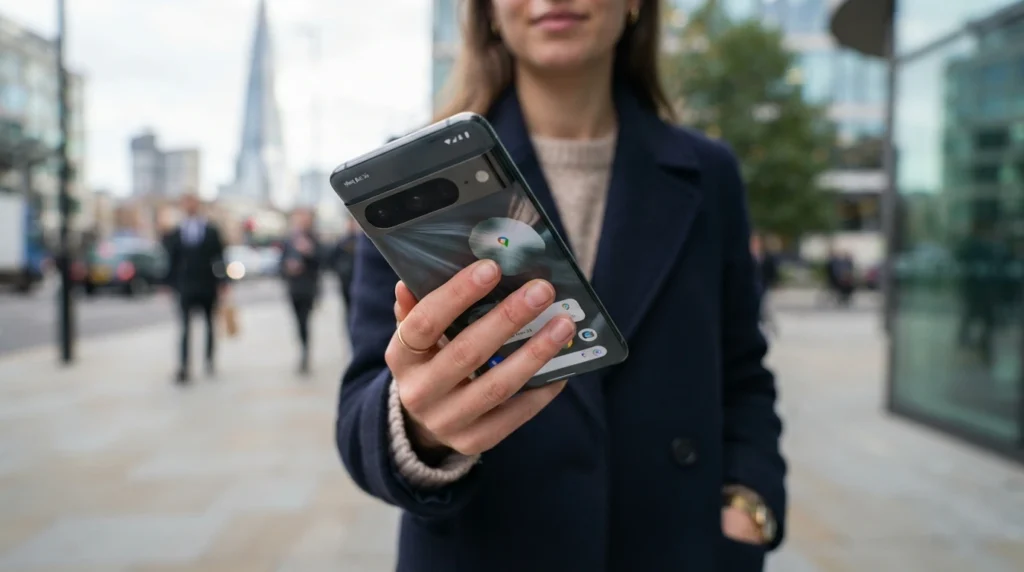
The Pixel 11 Pro Remains a Pixel
The familiarity of the Pixel 11 Pro is the first thing you notice.
That’s not necessarily a critique. The Pixel 11 Pro gains from Google’s years-long effort to establish a distinctive brand.
One of the phone’s best features is still its software. The UI has a clear, minimalist, and functional feel. Google’s strategy for Android differs significantly from highly customized alternatives. Pixel typically aims to make the experience feel intelligent and simple rather than bombarding you with dozens of features.
The issue is that familiarity can lead to stagnation over time.
After a few generations, you may begin to wonder where the significant evolution is, but the Pixel experience is refined enough that you hardly ever feel lost.
The Pixel 11 Pro is in the premium category, thus this is especially crucial.
“pleasantly refined” isn’t always sufficient when a phone is up against the priciest gadgets in the market.
Performance: Excellent, But Is It Enough to Compete?
One of the most crucial areas where Google’s strategy merits further investigation is performance.
In daily use, the Pixel 11 Pro is quick. Apps launch swiftly, multitasking is seamless, scrolling is responsive, and routine everyday tasks don’t reveal any glaring flaws.
This is more than sufficient for the majority of users.
However, flagship performance is more than just how quickly a phone opens Instagram or switches between messages.
Sustained performance, gaming, temperature control, challenging video editing, AI tasks, and how well the phone performs after extended use are all important considerations.
Google’s strategy gets more intriguing at this point.
Instead of only focusing on benchmark data, Google has increasingly positioned its bespoke Tensor silicon around AI and smarter smartphone experiences. That is a valid tactic. Indeed, it is maybe one of the things that sets Pixel apart.
However, there is a drawback.
When users contrast the Pixel 11 Pro with rival flagship phones, they might notice that the latter offer better sustained workloads, higher gaming performance, or more raw processing power.
This leads to a perception issue.
It’s not necessary for Google to win every benchmark. However, it must ensure that consumers never feel as though they paid flagship prices for inferior gear.
The star is still the camera.
Photography is one area where the Pixel 11 Pro still makes a strong case.
Google’s camera philosophy has always focused more on making challenging shots seem attractive with little effort than on creating technically flawless images.
That is still a significant edge.
Pixel photography typically performs well in scenarios where smartphones typically falter, such as difficult lighting, skin tones, scenes with a lot of HDR, and circumstances when you just need to point the phone and take a picture.
Consistency is the greatest asset.
To acquire a good photo, you don’t have to spend many minutes changing the settings. A large portion of the work is done for you by the computational photography process.
This is more important than laboratory criteria for parents, travelers, casual photographers, and anyone who just wants trustworthy images.
AI Is Turning Into the True Pixel Identity
AI Is Turning Into the True Pixel Identity
The hardware isn’t the most fascinating aspect of using the Pixel 11 Pro.
It is Google’s growing emphasis on artificial intelligence.
It’s obvious that Google wants people to view the Pixel as an intelligent phone rather than just another flagship Android device.
Given how challenging it is to compete only on specifications, that tactic makes sense.
Samsung possesses vast hardware resources. Apple is in charge of its own software and hardware ecosystem. Chinese producers are still pushing the boundaries of battery technology, screens, cameras, and charging speeds.
Google needs a different strategy to stand out.
That’s how AI works.
The question is whether AI features will actually be helpful or if they will just be another set of features that seem great when a product is introduced but almost ever have an impact on day-to-day living.
This difference becomes clear after using the Pixel 11 Pro for a week.
Time-saving AI features are the best. The ones that resemble technological demonstrations are the weaker ones.
The long-term future of Pixel may depend on that distinction.
Better Doesn’t Always Equate to Best Battery Life
Another area where expectations are important is battery life.
For many users, the Pixel 11 Pro can handle a normal day with ease; however, the experience is mostly dependent on how aggressively you use the phone.
Power consumption can undoubtedly be increased by navigation, camera use, mobile data, high-brightness outdoor sessions, gaming, and AI-heavy features.
This is not exclusive to Pixel.
However, high-end consumers are beginning to want flagship phones to have exceptional durability without always worrying about battery percentages.
Today’s top smartphones are more than just devices that last until bedtime. These phones virtually eliminate battery concern.
Google must adhere to that standard.
Although the display is outstanding, it is no longer sufficient.
Another area in which Pixel has emerged as a formidable flagship competitor is the display experience.
The Pixel 11 Pro offers the kind of visual experience consumers anticipate from a high-end smartphone, which requires a bright, fluid, and color-accurate screen.
It’s fun to watch videos. Text appears crisp. It’s smooth to scroll.
The issue is that great presentations are now commonplace.
A fantastic OLED panel was a key selling feature a few years back. These days, nearly all high-end smartphones have one.
As a result, Google can no longer use display quality as a key distinction.
It is currently considered the standard.
Design: Unique Without Being Extremist
Google should be commended for developing a recognizable smartphone design.
The brand’s visual identity now includes the Pixel camera bar. A Pixel may frequently be recognized from across a room.
That is worthwhile.
However, I also believe that Google has reached a stage where significant innovation must coexist with design refinement.
Although the Pixel 11 Pro appears to be a high-end smartphone, the smartphone industry is progressively experimenting with foldable designs, slimmer bodies, new materials, and drastically different form factors.
Google doesn’t have to imitate other companies.
Actually, it shouldn’t.
However, it must convey that the Pixel is evolving rather than just improving upon the Pixel from the previous year.
The Pixel 11 Pro’s advantages
- Superb Camera Experience
For those who value smartphone photography, the Pixel 11 Pro is still a fantastic option.
- Clean Android Applications
One of the main benefits of the phone is Google’s software expertise.
- Robust Integration of AI
AI is not viewed as a stand-alone application. It is becoming more and more interwoven into the whole Pixel experience.
- Unique Style
Rather than appearing like another generic flagship, the Pixel has a distinctive character.
- Outstanding Daily Experience
The Pixel 11 Pro is excellent for chatting, browsing, photography, social media, and everyday work.
- Long-Term Software Priority
The phone is more appealing as a long-term investment because of Google’s dedication to software support.
The Pixel 11 Pro’s drawbacks
- Performance Leadership Is Still Uncertain
Although AI and Google’s own workloads are given priority in the Pixel philosophy, buyers seeking the highest level of raw performance might find rival flagships more appealing.
- Expectations are raised by premium pricing
Customers demand perfection in every category once a phone reaches the premium price range.
- The Competition for Batteries Is Increasing
With regard to battery capacity and charging technologies, rivals are becoming more competitive.
- The Hardware Evolution of Pixel Feels Gradual
It’s possible that Pixel phones aren’t Google’s greatest problem. It is that advancements may not always seem as significant as those made by rivals.
- AI May Turn Into a Trick
Instead than just adding more features, Google must demonstrate that its AI features actually make people’s lives better.
My Greatest Fear Regarding Pixel’s Future
After a week, I was still thinking about this.
It’s not that I’m afraid Google will produce a poor phone.
It’s obvious that Google can produce high-quality smartphones.
There is concern that Pixel might develop into a brand that is consistently good but infrequently necessary.
In the flagship market, that is a risky position.
Apple has created an ecosystem that encourages investment.
Samsung provides a wide range of hardware, performance, display technologies, and a well-established Android environment.
In terms of charging, cameras, batteries, and cost, other manufacturers are very competitive.
Pixel needs to give customers a cause to say:
“I want a Pixel specifically.”
The camera was the solution for years.
Afterward, it evolved into a pure Android experience.
Google is now placing more and more bets on AI.
That might work, but only if AI becomes as essential as the camera used to be.
Is Purchasing the Pixel 11 Pro Worth It?
Absolutely, for the proper person.
The Pixel 11 Pro is a desirable flagship if photography, Google software, AI features, a clean Android UI, and a high-end overall experience are your top priorities.
Those who don’t want their phones crowded with pointless apps will find it particularly intriguing.
However, you might want to carefully compare it with other flagships before making a purchase if you are a passionate mobile gamer, are fixated on benchmark performance, or are searching for the fastest charging experience.
Not everyone is a good fit for the Pixel 11 Pro.
And maybe that’s alright
Pixel 11 Pro Evaluation
My conclusion after a week is surprisingly straightforward.
Although the Pixel 11 Pro is an excellent smartphone, the competition isn’t its biggest obstacle. It’s for tomorrow.
Google has developed a unique Pixel brand centered on software, AI, and photography. These components are still appealing.
Google is currently in need of another significant advancement.
The upcoming Pixel phones can’t just be marginally quicker, smarter, and better.
They must inspire enthusiasm for the potential of a Pixel.
because the market for high-end smartphones has evolved.
Customers now ask more than just:
“Is this phone good?”
They inquire:
“Why should I pick this phone over the ten other top-notch phones on the market?”
Good answers to that question can be found in the Pixel 11 Pro.
However, I don’t think Google has yet discovered the answer.
And that’s precisely what makes Pixel’s future so intriguing—and a little concerning.
Is it worthwhile to purchase the Pixel 11 Pro?
Yes, particularly if you give Google’s photo processing, clean Android software, and AI-focused features top priority. Customers who value gaming performance or lightning-fast charging, however, ought to contrast it with rival premium phones.
Does the Pixel 11 Pro work well for taking pictures?
One of the best arguments for selecting a Pixel is still photography. Google’s computational photography methodology is intended to yield consistently striking pictures without need significant manual modifications.
What is the performance of the Pixel 11 Pro?
Performance is responsive and seamless every day. However, when comparing flagship phones, consumers that place a high value on benchmark results, intense gaming, or prolonged workloads should consider factors other than daily speed.
Is the battery life of the Pixel 11 Pro good?
While demanding activities like gaming, navigation, camera use, and high-brightness screen sessions might affect endurance, battery performance is normally sufficient for daily use.
What distinguishes the Pixel from other Android phones?
Pixel has a unique identity thanks to Google’s blend of clean Android software, computational photography, AI features, and direct connection with Google’s services.
Is AI Pixel’s future?
AI is undoubtedly starting to play a significant role in Google’s Pixel strategy. Whether Google’s AI features become truly essential or continue to be ancillary components of the smartphone experience is the long-term question.
What are the Pixel 11 Pro’s main benefits?
The camera experience, software, AI integration, unique design, and refined everyday usability are its main advantages.
What are the main drawbacks?
Given the high cost of flagship smartphones, the primary issues are competition in raw performance, charging, and hardware innovation.
Concluding Remarks
For Pixel, the Pixel 11 Pro doesn’t seem to be the beginning of the end.
The exact opposite.
It sounds like a call from a business at a crucial juncture.
Google has the computational photography technologies, AI skills, and software know-how to produce something truly unique. Whether the business will take those advantages far enough is still up in the air.
I didn’t think the Pixel 11 Pro was a poor phone after a week.
Google needs to exercise caution, I thought as I left.
Because having “the phone with the great camera and smart software” might not be sufficient in the long run.
The next major Pixel innovation must clearly feel like the future.
And the Pixel brand may rise to prominence in the market for high-end smartphones if Google can provide that.
Pixel runs the risk of becoming something far less thrilling if it can’t:
An excellent phone that people appreciate but may not feel the need for.